Regulated Medical & Scientific Software Development
CannoliBytes helps research teams translate experimental and academic software into maintainable, testable, deployment-ready systems for validation-focused and regulated environments.
Our engineering approach emphasizes documented requirements, traceability, risk-informed design, verification, controlled change, reproducible releases, and technical documentation suitable for independent review.
From Research Prototype to Controlled Software
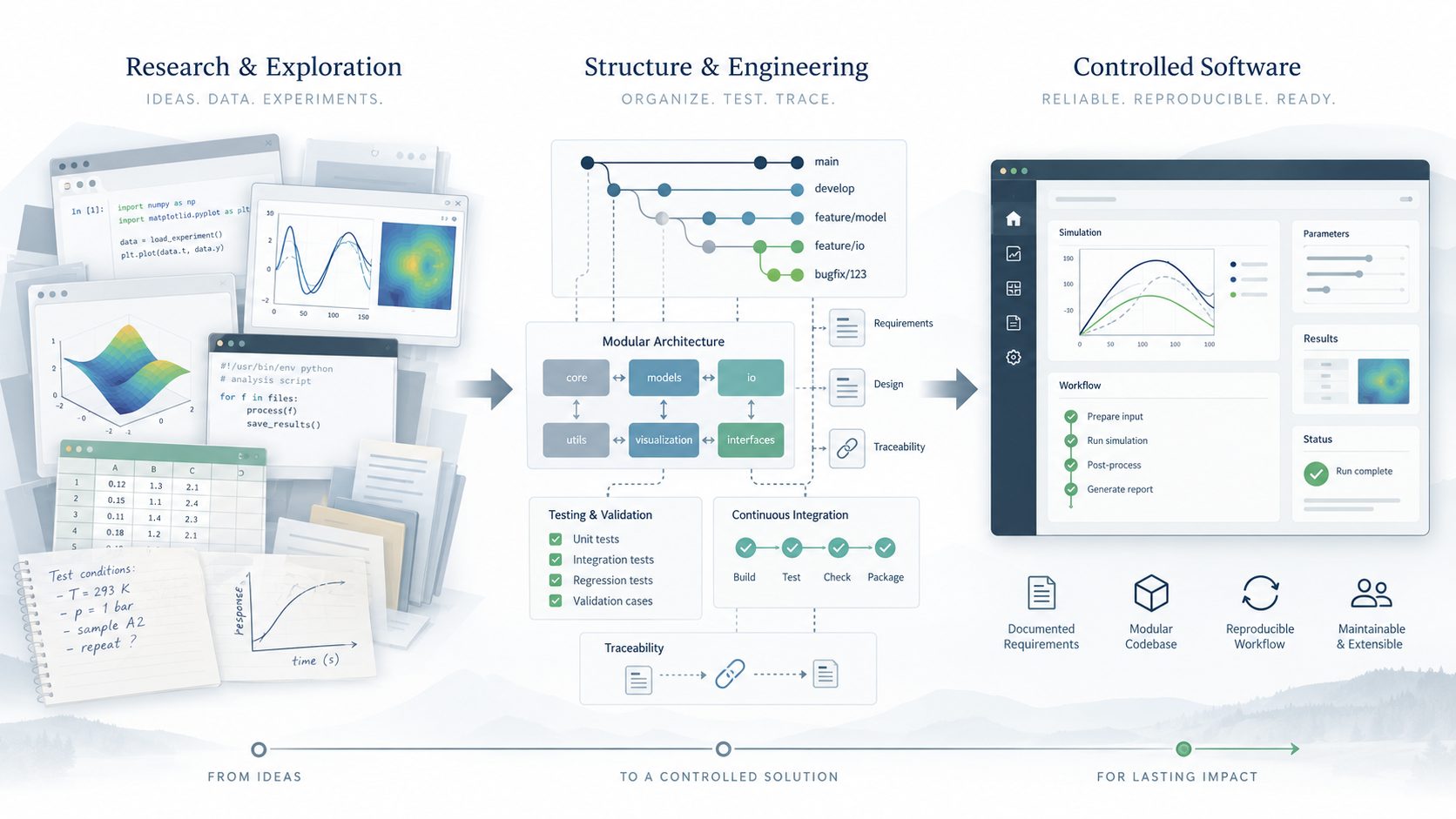
Research software often begins as scripts, notebooks, MATLAB code, spreadsheets, or proof-of-concept applications built to answer an immediate scientific question.
CannoliBytes helps transform those prototypes into structured software systems with defined interfaces, controlled source code, automated testing, documented requirements, reproducible builds, and maintainable architectures.
When regulatory or independent validation requirements apply, the development process can be expanded to include formal traceability, change control, risk-linked verification, release records, and validation-support documentation.
Lifecycle & Quality Capabilities
Requirements & Traceability
1
Documented software requirements with traceability from requirement through implementation and verification.
Software Architecture
2
Defined components, interfaces, data flows, dependencies, and architectural decisions.
Verification & Testing
3
Automated unit, integration, system, and regression testing with documented verification evidence.
Configuration & Change Control
4
Version-controlled source, dependency tracking, controlled software changes, and reproducible releases.
Risk-Informed Development
5
Software risk analysis and risk-control traceability appropriate to the project's intended use and regulatory context.
Validation Support
6
Technical documentation, release packages, test evidence, and software artifacts prepared to support independent verification and validation.